What a residential security assessment really covers
Why a residential security assessment matters
A home is more than a place to sleep. It holds your belongings, your routines, and the people you care about. Yet many homeowners never look at their locks, doors, and windows as a system. They think about security only after a break-in or a lost key. A residential security assessment changes that. It is a professional walk-through of every entry point, lock, and structural weak spot that could let someone in without permission. A residential locksmith trained in building security can spot problems that an ordinary eye misses. The goal is not to sell you new hardware. It is to show you where your home stands and what simple changes can make a real difference.
What a locksmith checks first: the front door assembly
The front door is the most used entry point. It is also the one most people assume is secure. A locksmith starts by looking at the door itself. A solid wood or metal door is strong, but a hollow-core door can be breached with little force. The frame matters just as much. If the frame is old, cracked, or made of soft wood, a good deadbolt can still be pushed through. The strike plate - the metal piece on the frame that catches the deadbolt - is often secured with short screws that pull out easily. A residential security assessment will note whether those screws are the standard half-inch type or longer ones that anchor into the wall stud. Replacing them with three-inch screws is a small fix that adds real strength.
The lock cylinder is the next point of focus. A basic lock cylinder can be picked or bumped in seconds with cheap tools. A locksmith will identify the brand and model, check for wear, and see if the pins inside are still holding properly. If the key is worn or the lock feels loose when the key is turned, the cylinder may need replacing. Key control is another factor. Some lock cylinders use restricted keys that can only be duplicated with permission. Others use standard keys that anyone can copy at a hardware store. A security assessment will tell you which type you have and what upgrading would mean for your peace of mind.
Deadbolts: single-cylinder vs. double-cylinder
Most homes have a single-cylinder deadbolt. It uses a key on the outside and a thumb turn on the inside. That is convenient for a quick exit. But if the door has a glass panel within arm's reach, an intruder can break the glass, reach in, and turn the thumb turn. A double-cylinder deadbolt requires a key on both sides. That stops the reach-through trick, but it also means you need a key to get out in an emergency. Building codes in many areas allow double-cylinder deadbolts only if the key is stored nearby or the lock has a quick-release mechanism. A locksmith will discuss the trade-off with you and suggest what fits your door and your local rules.
Sliding doors and secondary entry points
Sliding glass doors are a common weak spot. The standard latch is a small hook that can be lifted with a thin tool. A locksmith will check whether the door has a secondary lock - a pin or a bar that stops the door from sliding even if the latch is released. They will also look at the track. If the track is worn or the door sits loosely, it can be lifted off the track entirely. A simple wooden dowel or a commercial track lock can fix that. The same logic applies to patio doors, French doors, and any door with a large glass panel. The glass itself matters: tempered glass is harder to break than annealed glass, and laminated glass is even stronger. A security assessment will note what type you have and whether replacing it is worth considering.
Windows on the ground floor are another concern. A locksmith checks the window locks - the sliding sash lock, the casement lock, or the pin lock. Many older windows have locks that are easy to open from outside with a thin blade. A residential locksmith will recommend adding a secondary lock or a security film that makes the glass harder to break. For basement windows, the risk is different. A window well can hide a break-in from street view. A locksmith will note whether the window lock is accessible from outside and whether the window itself is large enough for a person to crawl through.
Garage doors are often overlooked. The door between the garage and the house is frequently a hollow-core door with a simple privacy lock. If the garage door is left open or the opener is easy to hack, that interior door becomes the real target. A locksmith will check both the garage door opener's security features and the lock on the service door. They will also look at any side door that leads into the garage.
Smart locks and access codes
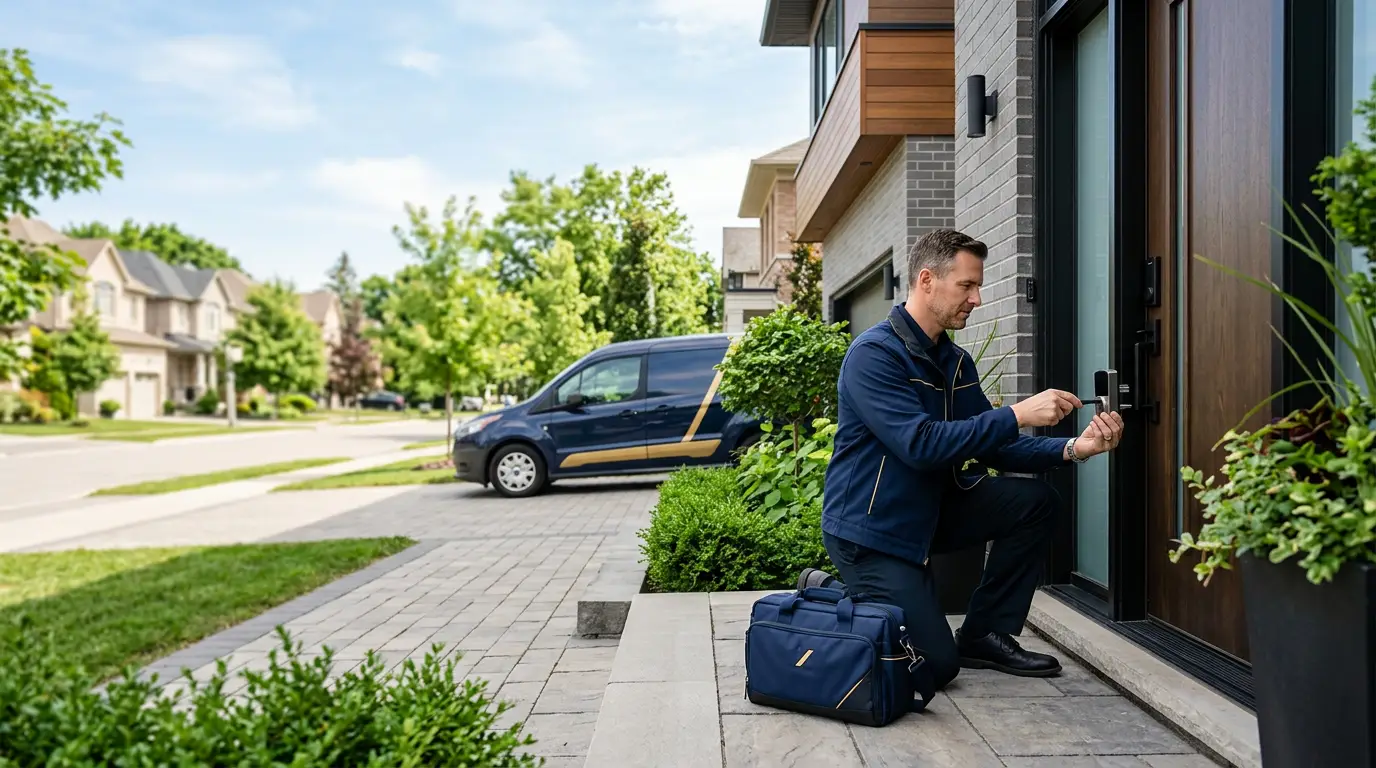
Smart locks are becoming common in residential homes. A residential security assessment includes a review of the lock's firmware, the strength of the access code, and how the lock communicates with the rest of the system. Many smart locks use Bluetooth, Wi-Fi, or Z-wave. Each has different vulnerabilities. A locksmith will check whether the lock has been updated to the latest firmware and whether the default access code has been changed. They will also check whether the lock can be physically bypassed - for example, if the keypad can be removed with a screwdriver or if the backup key cylinder is a low-security model. Smart locks are convenient, but they are not a replacement for a solid deadbolt and a strong door frame.
Key control and master key systems
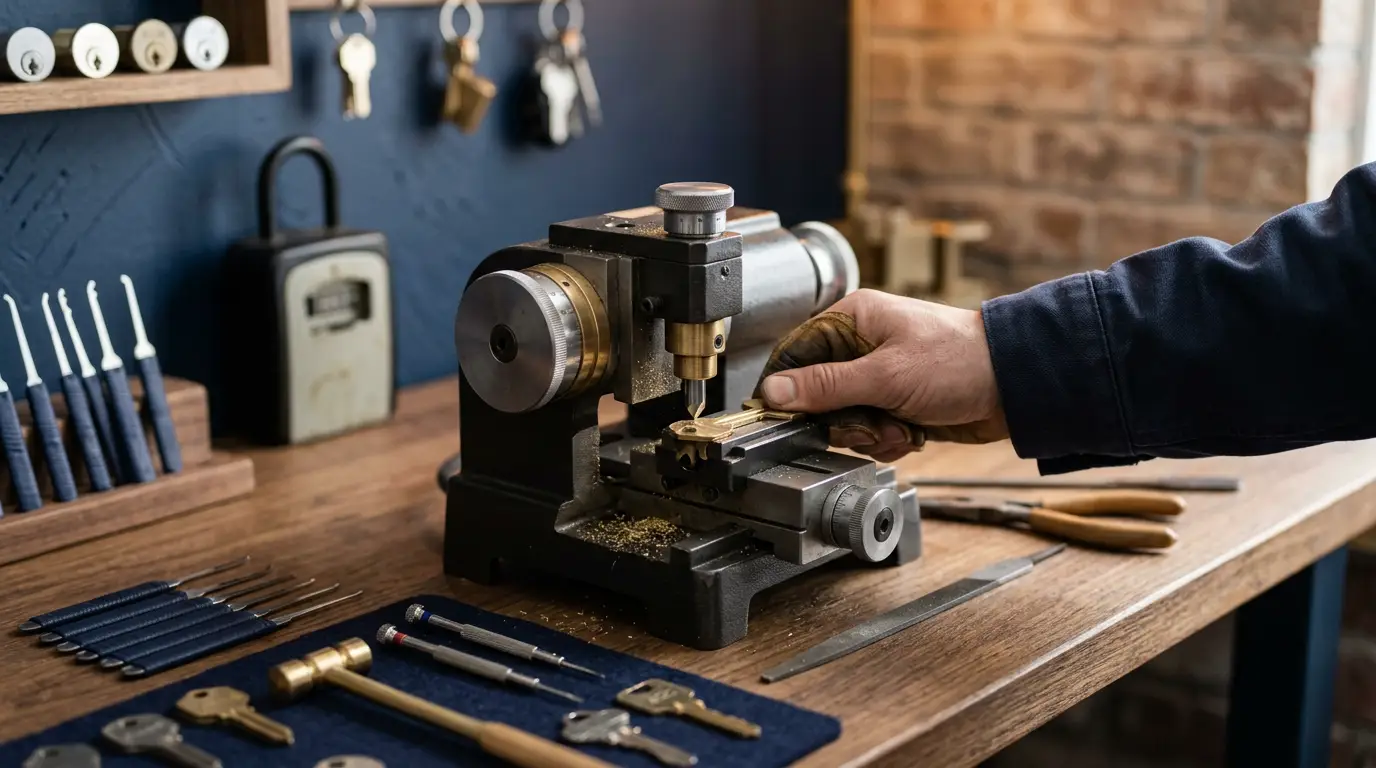
If you have multiple rental units or if you give keys to house sitters, dog walkers, or contractors, key control becomes important. A locksmith will review the current key system. If every key can be duplicated at any hardware store, upgrading to a restricted keyway system makes sense. Restricted keys are cut only by the locksmith who supplies them, and they require a signed authorization to duplicate. For a single-family home, the assessment might be simpler: does anyone else have a copy of your key, and can you get those copies back? A locksmith can rekey the locks so that old keys no longer work, and new keys are issued only to the people you choose.
What the assessment does not cover
A residential security assessment focuses on the physical entry points and the locks that secure them. It does not include alarm systems, cameras, motion sensors, or glass break detectors, though a locksmith can often point you to a security company that handles those. It does not include structural repairs like patching holes in the wall or replacing rotten door frames. Those are jobs for a handyman or a carpenter. But a good locksmith will tell you if a repair is needed and what kind of professional to call.
What the results mean for you
After the assessment, you get a clear picture of your home's vulnerabilities. Some are easy to fix: replace short strike-plate screws with longer ones, add a secondary lock to a sliding door, rekey the locks after a lost key. Others require a bigger investment: replace a hollow-core door with a solid one, upgrade to a high-security deadbolt, or install a restricted keyway system. The locksmith explains the options and the trade-offs without pressuring you. A good assessment helps you prioritize: which fix gives the most security for the least cost, and which one addresses your biggest risk.
For homeowners in Vaughan, Ontario, the conditions are similar to many suburban areas. Older homes may have original locks and frames that have settled over decades. Newer homes often have builder-grade hardware that meets the minimum code but not much more. A residential locksmith who works locally, like the team behind locksmithvaughanontario.com, knows the common weak points in the area. They can point out what to look for in a door that was installed ten years ago versus one installed last year. The assessment is not a sales pitch. It is a factual review of your home's current state and a practical list of what to do next.

One of the most useful parts of the assessment is the conversation about habits. A locksmith may ask how you store spare keys, whether you leave windows open when you go out, and how many people have a copy of your house key. Those habits matter more than the lock brand. A high-security deadbolt is useless if the spare key is under the doormat. The assessment helps you see the whole picture: the hardware, the frame, the glass, and the human factors.
A residential security assessment is not something you do once and forget. Locks wear, doors settle, and technology changes. Repeating the assessment every few years or after a major change - a renovation, a new roommate, a lost key - keeps your security up to date. A good locksmith will explain what to watch for between assessments and when it is time to call them again. For a thorough check of your home's entry points, a visit from a qualified residential locksmith is the most direct way to know where you stand.